
A manager has a disciplinary matter on her desk. She types the facts into a chatbot and asks whether there are grounds to dismiss. Ten seconds later she has an answer: fluent, reasoned, sure of itself. It reads like advice from someone who knows the law. It might even be right.
The trouble is that she cannot automatically tell from looking, not if it is a nuanced matter. And neither can the person who provided the information.
This is the precariously subtle problem with having AI everywhere. On a screen, a confident answer and a correct one are identical. Same clean paragraphs, same calm authority, same absence of the word “maybe.” In most of working life that is a manageable risk. A wrong answer about a spreadsheet formula gets caught when the numbers don’t add up. But an employment decision is not a spreadsheet. It is going to be tested, by an outside body, against a standard that does not care in the slightest how fluent the reasoning sounded.
And this is the important bit. In New Zealand, a dismissal or a serious disciplinary decision can be examined at mediation, at the Employment Relations Authority, or in the Employment Court. The test there is not “did you reach a reasonable-sounding conclusion.” It is whether a fair and reasonable employer could have done what you did, in all the circumstances, and whether, along the way, you sufficiently investigated, put your concerns to the employee, gave them a real chance to respond, and genuinely considered what they said before deciding. “The system told me so” fails every limb of that. The standard was never about having an answer. It was about a person having reasoned their way to one, on accurate facts, through a fair process.
I should be precise about what I mean, because two very different things get woven together under “AI in the workplace.” I am not talking here about whether a hiring algorithm subtly discriminates. Make no mistake, that is a real issue, but a separate one, with its own problems. I mean generative AI used inside the employment relationship: drafting the warning letter, summarising the investigation notes, weighing whether the threshold for dismissal is met. The everyday, invisible use. The use almost nobody has a policy for.
And here is what actually gets lost when that use goes unchecked. It is not mainly that the AI is wrong, often it is roughly right, but that it removes the trace.
A decision made by a person leaves a path behind it. What they knew. What they weighed. Why they landed where they did. Defensibility, when the challenge comes, is almost entirely about that path and hardly at all about the destination. You do not, in the end, defend the outcome. You defend how you arrived at it. A decision that leaned on an AI output can reach exactly the same place with no path behind it — a chatbot session no one saved, or if saved, reveals wording that can be perceived as a predetermination, or reasoning no one can reconstruct—a conclusion that appeared rather than was reached. When the grievance lands, you are left holding the outcome and nothing else. The right answer, and no way to show your working.
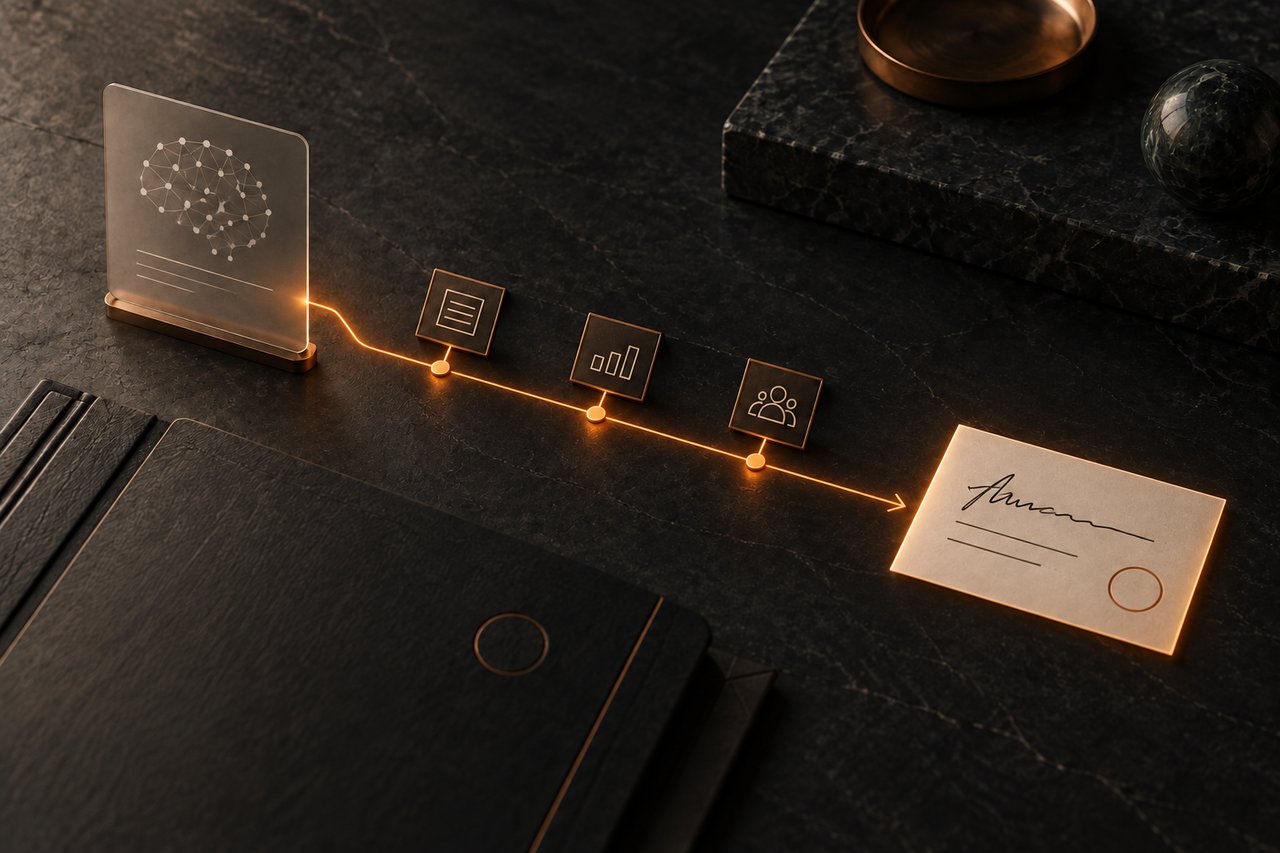
So what protects an employer is unglamorous, and it looks nothing like the ten-second answer.
It looks like this. Establish what is actually known, and keep it separate from what has merely been assumed. Test the situation against the obligations that govern it — good faith, procedural fairness, and privacy. Reason to a decision, and then write down the reasoning: the evidence it rested on, the principles applied, and what would have changed the outcome. And wherever AI touched any of it, check its output against a primary source before it counts for anything, rather than trusting it because it sounded authoritative.
Do that, and what you are left with is not an opinion you have to take on faith. It is a decision you can hold up to scrutiny: what was decided, what it rested on, and why it would stand if it were questioned a year later. If a grievance arrives, the reasoning is already on the record — not reconstructed, under pressure, after the fact.
None of this is an argument against using AI. It is a good instrument and a bad principal. Use it to draft, to organise, to move quickly through the routine parts. Just do not let it decide, because it cannot be held to account for the decision. You are. That is the whole distinction between a tool that extends your judgment and one that subtly replaces it.
The employers who come through the next few years well will not be the ones who banned AI, and they will not be the ones who trusted it. They will be the ones who used it, and kept the judgment — and the record of that judgment — firmly human.
Technology evolves. Governance must keep pace.
This article provides general information and commentary. It is not legal advice.